
Key points
If you only read three lines
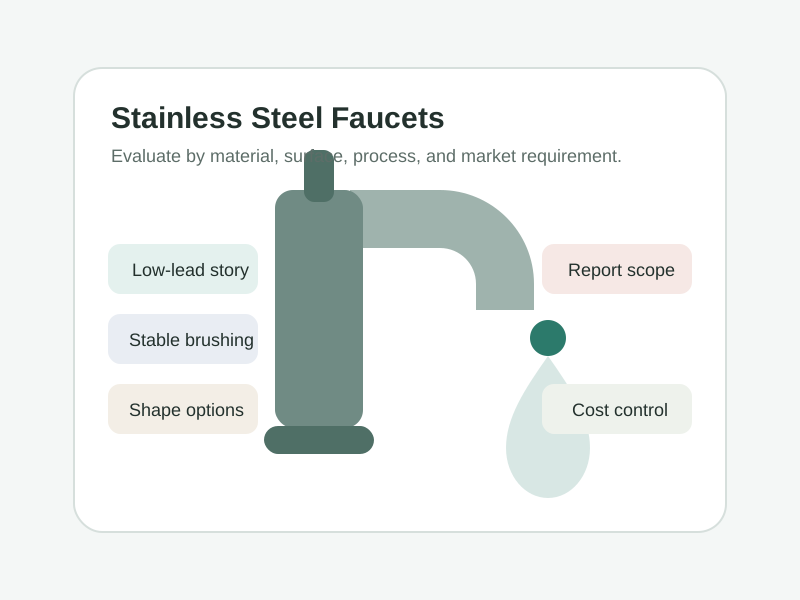
- Safety is the main reason buyers ask about stainless steel faucets. Stainless steel has no intentional lead addition like some machinable brass alloys historically did. This makes it attractive for kitchen, drinking-water, and RO faucet programs with lead-content requirements.
- Brushed stainless steel is the most stable surface direction. It is the base material's own finish. Plated or colored finishes need the right process. Confirm the color, surface method, sample, and order.
- Modern stainless faucet production is more flexible than before. Better equipment and process control support more shapes and batch production options. However, confirm the grade, wall thickness, welding, polishing, finish, and certificate scope.
Chapter 01
Why Buyers Consider Stainless Steel Faucets
The first reason is safety. For drinking-water faucets, buyers review lead content, chemical testing, and local water-contact rules. They also check the documents required by the destination market.
Common faucet grades such as 304 stainless steel do not need lead for machining. Some brass formulations historically used lead to improve machinability. This makes stainless steel attractive for kitchen, drinking-water, and RO faucets. Buyers review the wetted material for compliance.
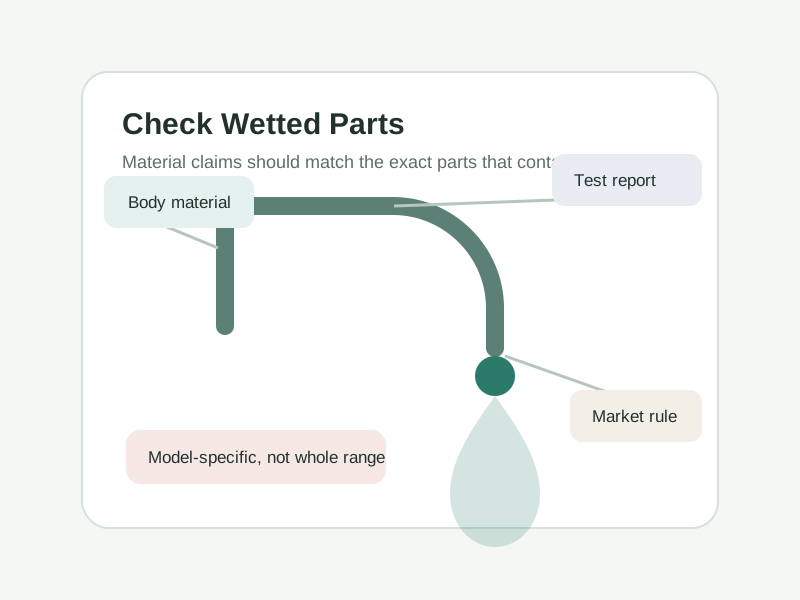
That does not mean every stainless steel faucet automatically satisfies every market requirement. The product still needs to be confirmed by model, material grade, wetted-part structure, test report, and destination market.
444 models Every model in Faucets Each model shows its SKU, material, and finish, so you can check our current models before you send us a product list. View All ProductsChapter 02
Lead Requirements: What Buyers Should Check
Different markets control lead in drinking-water products in different ways. In the United States, the EPA explains how the Safe Drinking Water Act defines lead free. For pipes, fittings, plumbing fittings, and fixtures, lead free means a weighted average of 0.25% lead across wetted surfaces. Separate rules apply to solder and flux. The EU Drinking Water Directive sets lead values for water intended for human consumption. It also introduces EU hygiene requirements for materials in contact with drinking water.
For faucet sourcing, do not rely only on the words "lead free" in a catalog. Ask which parts contact water and which material grade is used. Confirm the relevant standard or market requirement. Also confirm that the test report covers the exact quoted model.
| Buyer question | Why it matters | What to ask before quotation |
|---|---|---|
| Is the faucet for drinking water? | Kitchen, drinking-water, and RO faucets face stricter material scrutiny than non-potable fittings. | Confirm wetted materials, market requirement, and report scope. |
| Which market is it for? | US, EU, Gulf, and other markets use different standards, documentation, and testing routes. | Send the target regulation or buyer-required certificate list before quotation. |
| Is there a model-specific report? | A report for one model does not certify a whole faucet range. | Check model number, tested sample, date, and tested items. |
Chapter 03
Where Stainless Steel Fits Especially Well
Stainless steel is especially relevant for faucets used with drinking water. Buyers also want a clear material story with fewer lead-content concerns.
- Kitchen faucets — common in residential, apartment, hotel, and distributor ranges, where water-contact material is often reviewed carefully.
- Drinking-water and RO faucets — small faucets used with filtered or reverse-osmosis water, where buyers often ask for clearer material confirmation.
- Project lists with kitchen and bathroom hardware together — stainless steel clarifies the material direction when buyers source sinks, kitchen faucets, and accessories as one coordinated package.
In VeriBath's approved fact base, SGS material reports show lead not detected for specific C01 kitchen faucet and L2560 drinking-water faucet samples. That evidence is model-specific; it should not be treated as a whole-range certificate.
Need to check stainless steel faucet options?
Send your faucet type, target market, finish, quantity, and any required lead or water-contact standard. We will review the material and report scope by product before quotation.
Chapter 04
Surface Advantage: Brushed Stainless Is the Most Stable
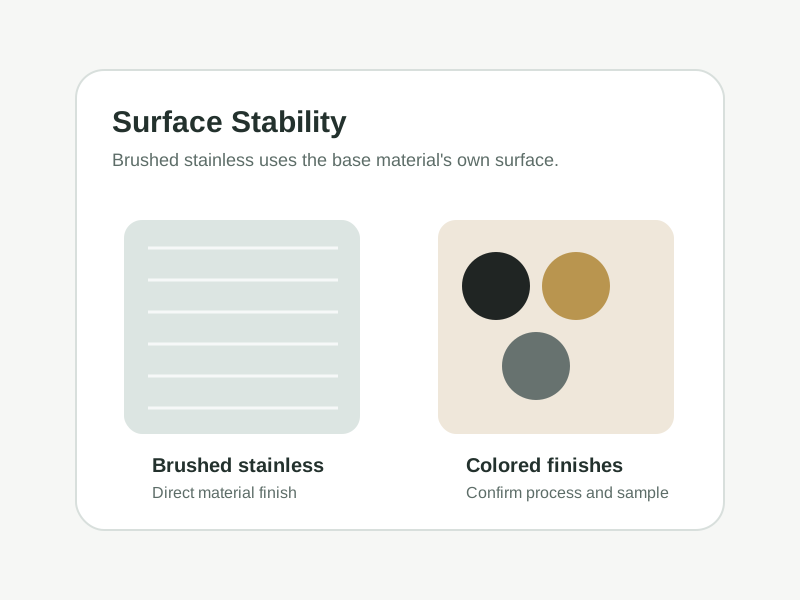
For stainless steel faucets, brushed stainless is the most direct and stable surface direction because it uses the base material's own look. There is no need to imitate another metal color. Scratches and daily wear are also less visually disruptive than on some high-gloss or plated surfaces.
This differs from chrome-plated brass, which uses a plating system over the base material. Brass remains strong for electroplating and traditional faucet production. Stainless steel is strongest with brushed, satin, or polished stainless surfaces.
Matte black, brushed gold, gunmetal, metal grey, and other colors are possible on stainless steel. However, the process must suit the target color and use environment. Before ordering, confirm the sample, finish method, color tolerance, and cleaning requirements.
Chapter 05
Finish Options: Not One Process for Every Color
Stainless steel does not remove the need for finish planning. It changes the questions buyers should ask.
| Finish direction | Typical logic | Buyer check |
|---|---|---|
| Brushed stainless | Uses the stainless surface itself; the safest stainless direction. | Confirm brushing direction, gloss level, and sample consistency. |
| Polished stainless | Bright metal look without a separate color layer. | Confirm polishing level and fingerprint expectations. |
| Matte black / gunmetal / metal grey | Needs a suitable surface-treatment route for the target color and durability. | Confirm finish method, sample, cleaning guidance, and order quantity. |
| Brushed gold or warm metallic colors | Are achievable, but color control and batch consistency matter. | Confirm approved sample and acceptable color tolerance. |
Chapter 06
Shape Diversity Has Improved
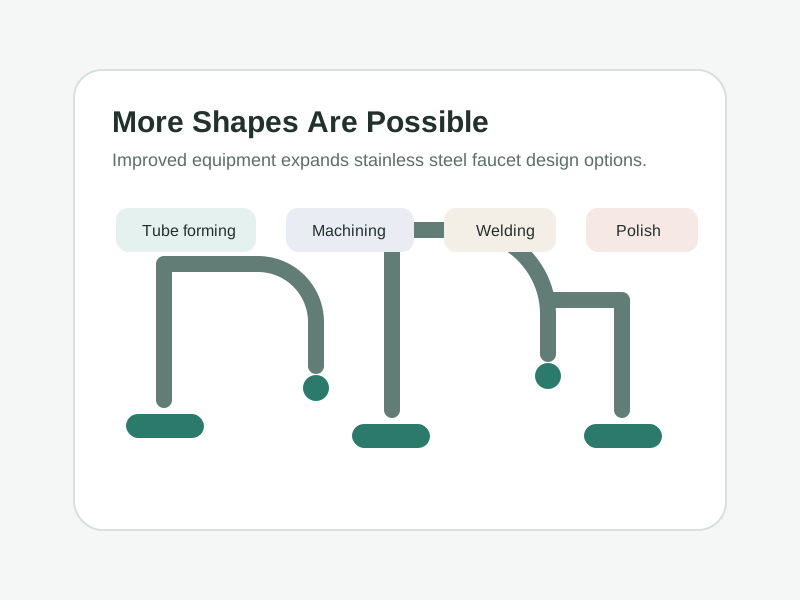
Older stainless steel faucet production was associated with limited shapes, slower processing, and investment casting constraints. That is no longer the full picture. Improved tube forming, CNC machining, welding, polishing, and assembly processes enable modern stainless faucet designs in batches.
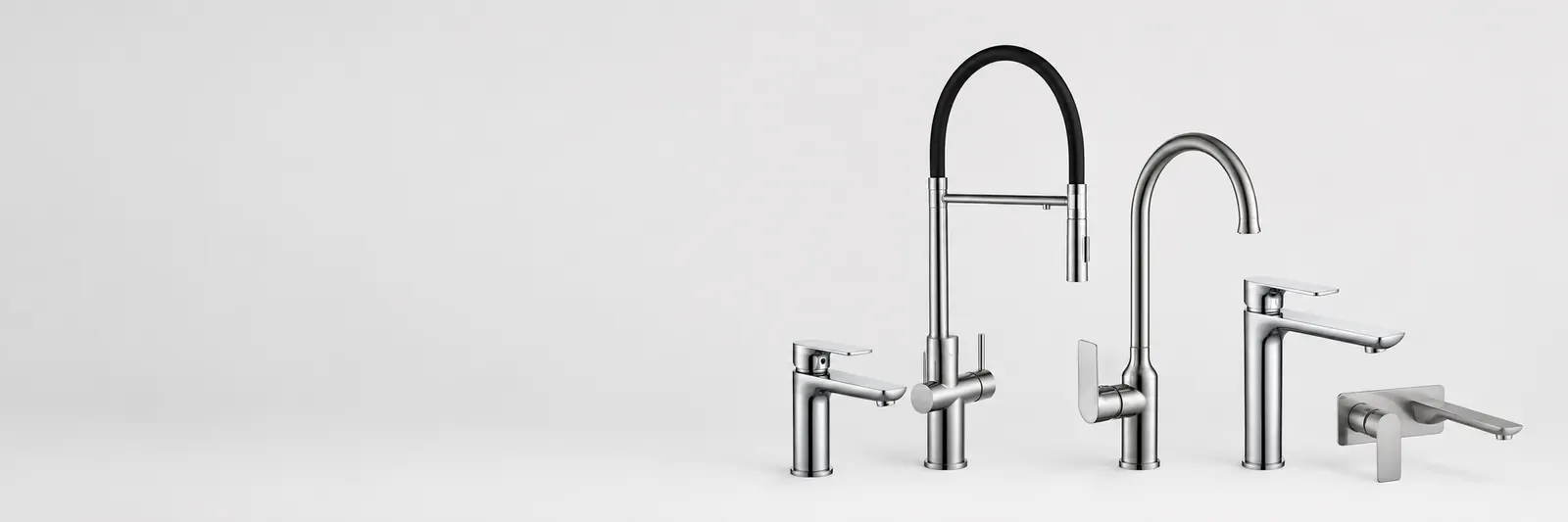
Buyers now consider stainless steel for more than plain utility styles. Options include basin faucets, kitchen mixers, pull-out kitchen faucets, RO faucets, and selected project styles. Feasibility is determined by the target shape, order quantity, tooling, and finish.
Still, stainless steel is not infinitely flexible. Brass or zinc alloy better suit sharp transitions, complex cavities, or heavy decorative forms. They also suit very low-volume custom styles. Confirm the production route before promising a design.
Chapter 07
Stainless Steel vs Brass Faucets at a Glance
For faucet sourcing, stainless steel and brass are both useful. The right choice depends on water-contact requirements, surface target, product shape, price level, and market documentation.
| Criterion | Stainless steel faucet | Brass faucet |
|---|---|---|
| Lead-content story | Strong advantage for drinking-water discussions when grade and reports are confirmed. | Meets lead requirements with the right alloy and certification, but must be verified. |
| Brushed metal finish | Very strong because the base material is brushed directly. | Depends on plating or coating over the brass body. |
| Electroplated chrome | Possible, but not always as straightforward as brass. | Traditional strength; mature plating supply chain. |
| Shape complexity | Improving, especially with forming, welding, and machining routes. | Still strong for complex cast faucet bodies. |
| Quotation risk | Need to confirm grade, wall thickness, welding, polishing, and finish process. | Need to confirm alloy, lead requirement, plating quality, cartridge, and body weight. |
Chapter 08
What to Confirm Before Ordering Stainless Steel Faucets
A stainless steel faucet inquiry should not stop at the material name. Buyers should confirm the details that affect compliance, appearance, cost, and batch consistency.
-
Confirm faucet type and water use
State the product type: kitchen, basin, drinking-water, RO, or another faucet.
-
Confirm material grade and wetted parts
Ask which parts touch water and whether they are stainless steel, brass, plastic, or another material.
-
Confirm target market and required reports
Send any lead, water-contact, GSO, NSF/ANSI/CAN, EU, or buyer-specific requirement before quotation.
-
Confirm finish method and sample
For brushed stainless, confirm texture and gloss. For colored finishes, confirm the process, sample, and batch tolerance.
-
Confirm structure and production route
Review body construction, welding, polishing access, wall thickness, cartridge, aerator, hose, and packing before mass production.